

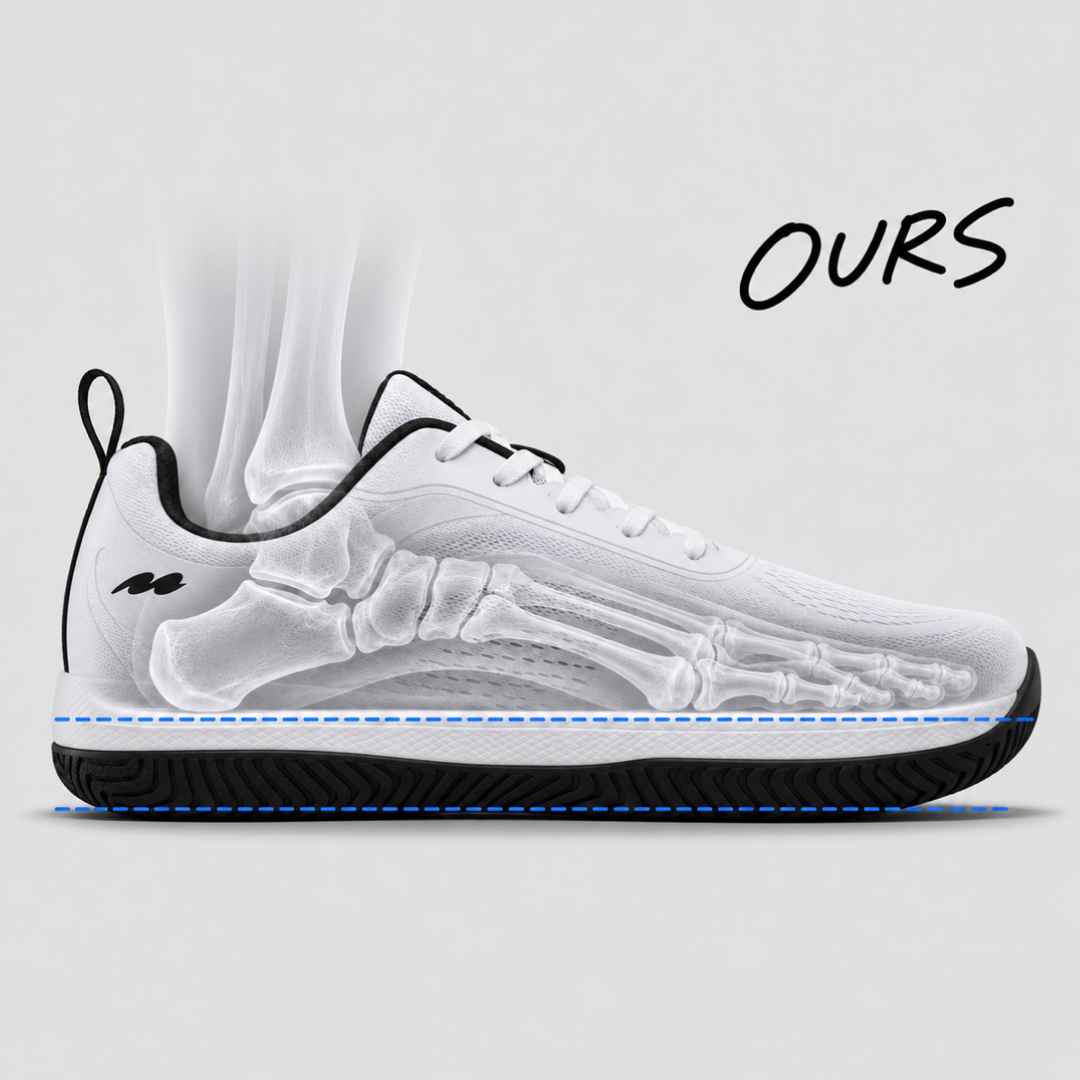
Zero drop, explained
What "drop" means, why a level heel feels different, and how to switch in 3 weeks.
What the research says toe room does for your balance, your first step and your toenails on the court, and a 30-second test to see whether your shoes are squeezing you.
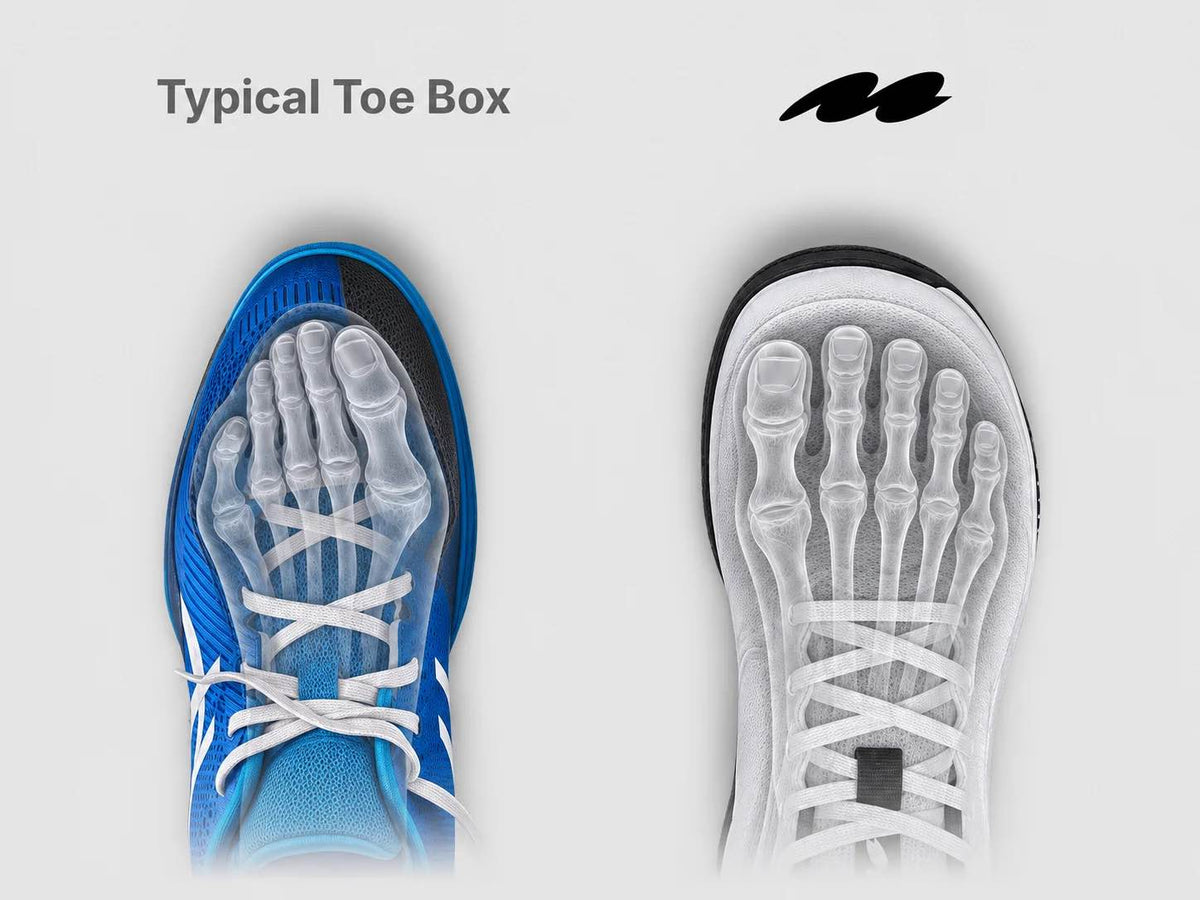
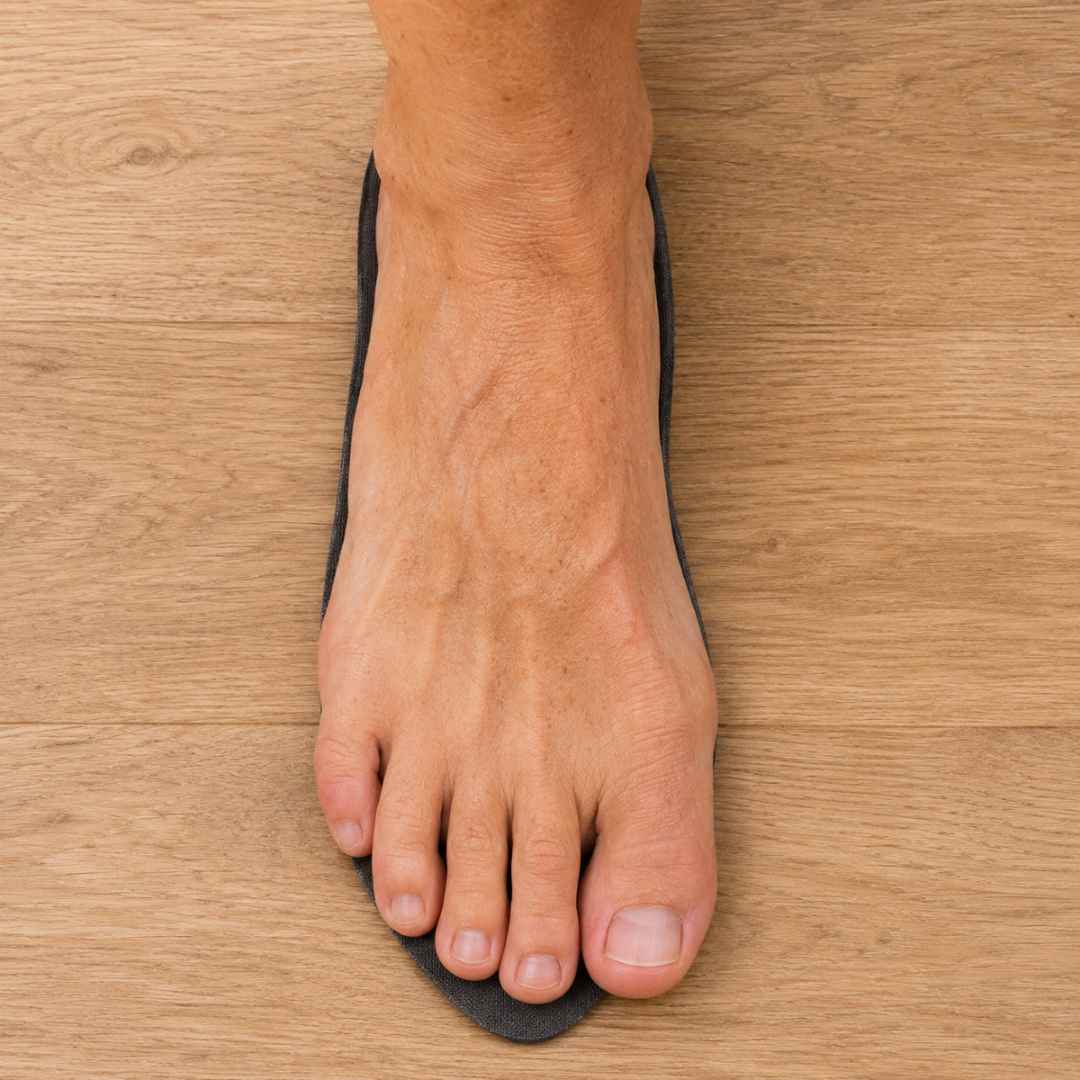
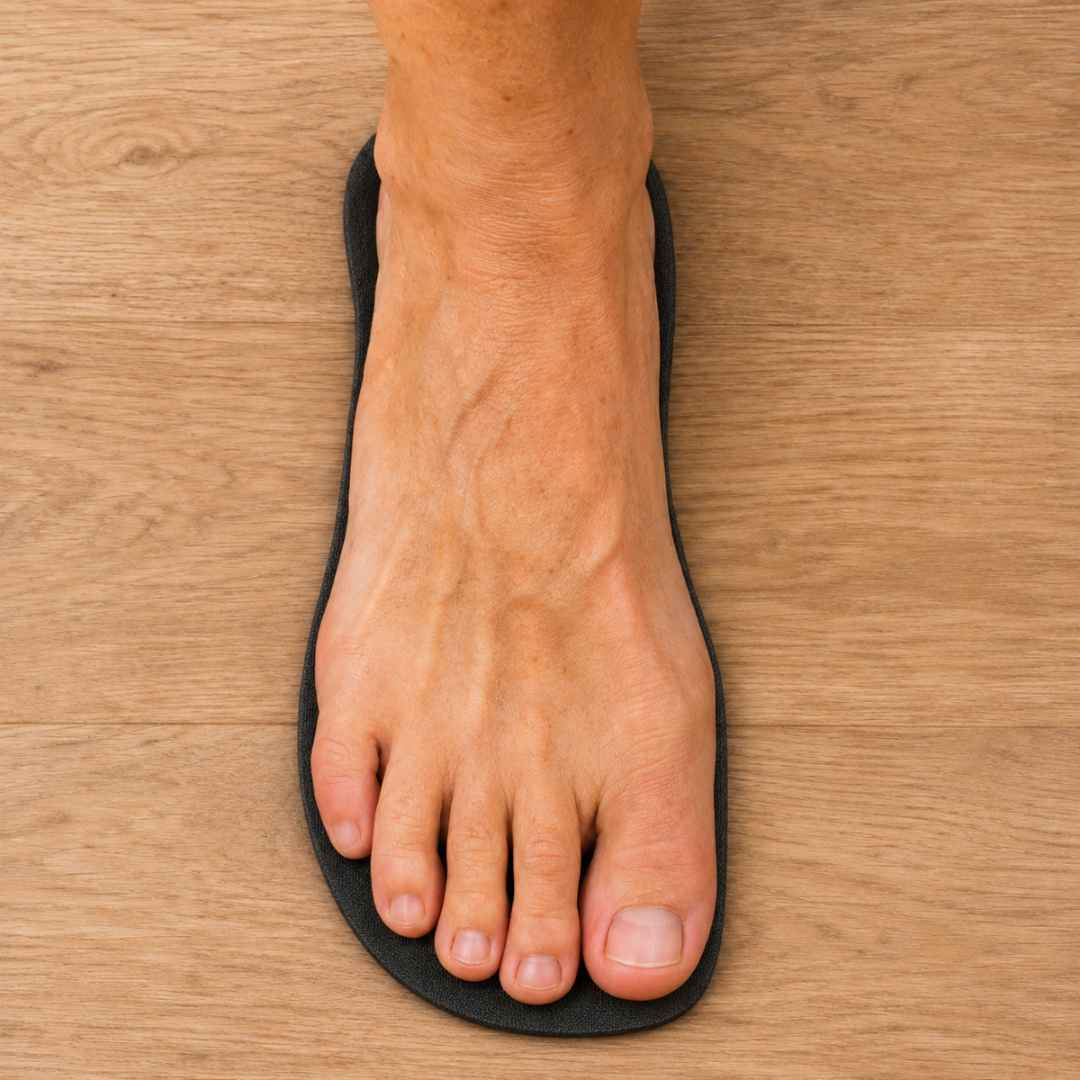
Stand up barefoot and look down. Your foot is narrowest at the heel and widest across the toes. Most court shoes are the opposite: widest at the ball of the foot, then tapering to a point.
That point is where your toes go. They get pushed together every day and in every match.
Your feet weren't born that shape, and shoes don't fit most people well. A review of 18 studies found that 63–72% of people wear shoes that don't match the width or length of their feet (see the review). Researchers who compared lifelong barefoot walkers with people who wear shoes found the barefoot group had wider feet, with pressure spread more evenly across the whole foot (see the study). Feet adapt to the shoes we put them in.
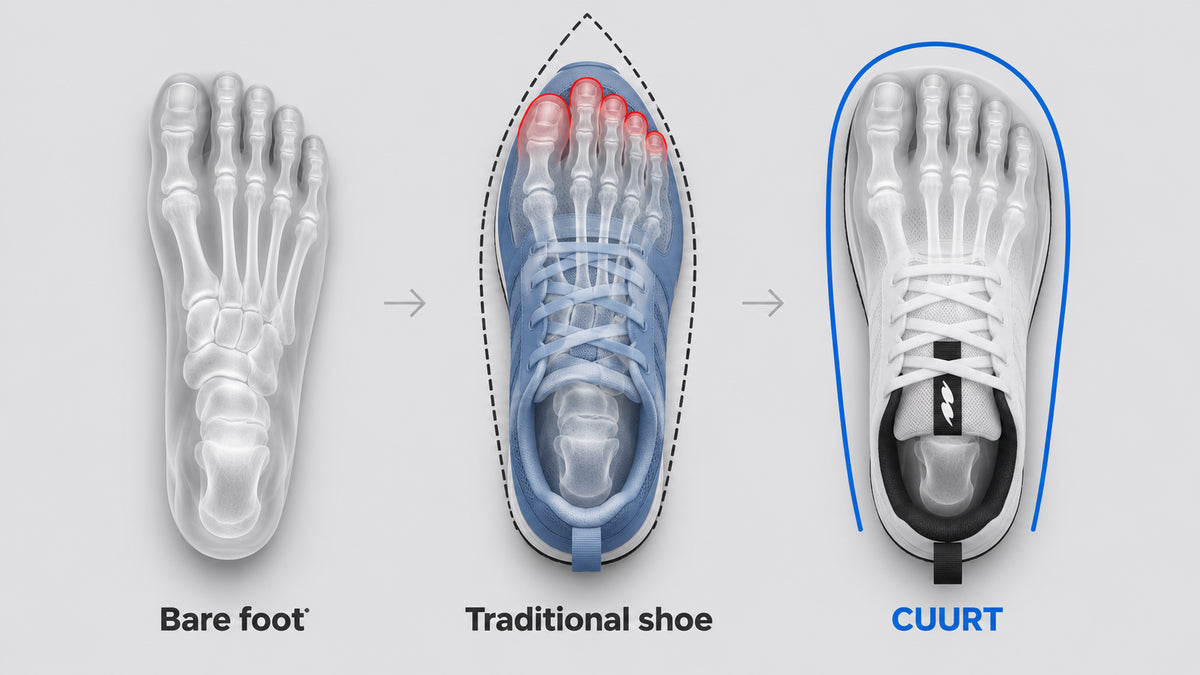
Many brands sell a "wide" version. Usually that means more room across the ball of the foot. The front still tapers, so your toes still end up squeezed into a point.
A wide toe box is a different shape. The front of the shoe stays wide all the way to the end, so each toe, including the little one, has its own space. When you shop, look at the shape of the front of the shoe, not just the width label.
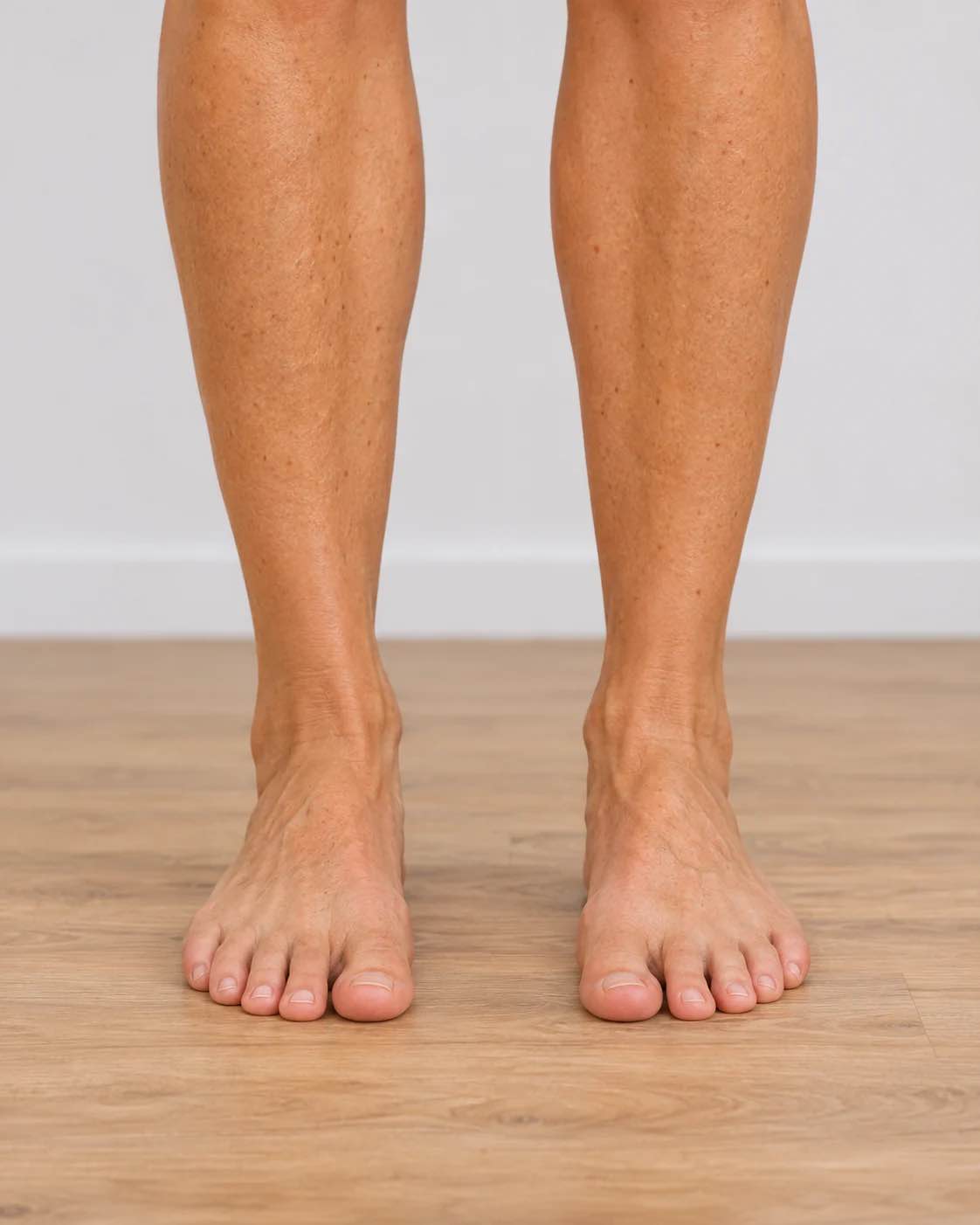
Toe splay is the natural spreading of your toes when you put weight on your foot. Go from sitting to standing barefoot and watch: your toes fan out a little. Your whole foot also gets slightly wider and longer under load.
When your toes can spread, your foot stands on a wider, steadier base. It works like spreading your fingers when you push yourself up off the floor.
Pickleball and tennis are full of quick stops, split steps, lunges and side-to-side moves. Your toes help with all of them.
A 2025 study tested this directly. Thirty athletes did sprints, lateral shuffles and sidestep cuts in shoes that were identical except for the toe box. With just 3 mm more toe room, athletes moved faster on sprints, side shuffles and cuts, and pushed off with more force (see the study) More toe room meant quicker, more confident movement. The researchers' conclusion: a bigger toe box improved both forward and side-to-side movement.
A wider base under your forefoot helps you land steady and ready to move.
Grip on stops and changes of direction. Spread toes give your foot more contact with the sole, so you can push off with confidence. In athletes, toe push-off strength is linked to faster change of direction (see the study)
Your big toe is the last part of your foot to leave the ground. A tapered shoe bends it inward, so it can't line up the way it naturally wants to.
Less squeezing means less rubbing, fewer hot spots, and less pressure on your toenails in the third game than in the first.
You've probably felt some of these:
Lab tests show the shape of the toe box changes how much pressure lands on your toes, even in healthy feet (see the study). Over years, that adds up. In a study of 2,627 women, those who wore very narrow toe boxes in their 20s had about 2.7 times the odds of reporting a bunion later in life, compared with women who wore very wide ones (see the study). A newer 7-year study of adults over 50 linked constrictive footwear to new bunions too, and found that toe alignment can still change after 50 (see the study).
Shoes aren't the only cause: genetics and age play a part. But the pattern across studies is consistent, and the fix is simple: give your toes room.
Your feet keep changing after you stop growing. A 2024 study scanned the feet of 374 women who play racket and team sports. Players over 30 had measurably wider feet than players aged 18–29, and the researchers called on sports-shoe makers to design for that (see the study). Many players move to a bigger shoe size to get width, which leaves extra length that lets the foot slide.
Your toes also help keep you steady. In a study of 312 adults aged 60–90, people who fell during the following year had about 20% weaker big-toe strength than people who didn't (see the study). Strong, free toes are part of good balance at any age.
Lace it right, then let your feet do the work. Lace snug over the midfoot with a heel lock, loose over the toes. Then give your toes a few weeks to adapt and spread.
If they do, your toes are being squeezed every time you play.
Most people love the toe room right away. Because CUURT is also zero drop, give your feet and calves about 4 weeks to adjust: easy wear in week 1, moderate in week 2, longer and harder play in week 3, fresh in every game 4. Read the full plan on our New to Zero Drop page.
Week 1
Start with about 10 minutes a day. Add a little each day if you feel fine the next morning. Short walks; a few easy rallies late in the week
Week 2
Longer wear and walks; 30–60 min social games.
Week 3
Full sessions, competitive games and drills
after Week 4
Don't be surprised if your partners start asking how you're still fresh in the last game.
Don't wait until it's too late: start training your feet now, and help them get stronger.
Alternate shoes at first. CUURT for shorter sessions, your old pair for long tournaments.
Don't add too much too fast. Increase your time on court a little at a time, not all at once.
Lock your heel. Use heel-lock lacing so your foot stays put on stops. A loose heel is the most common reason players feel unstable in week 1.
Switch in your off-season or during a lighter week of play.
Try switching in your off-season or during a lighter week of play.
Use our 5 simple moves (calf stretch, calf raises, toe spread, towel scrunch, foot roll) on the New to Zero Drop page.
What "drop" means, why a level heel feels different, and how to switch in 3 weeks.